Decoración con tonos naranjas: colores que combinan e ideas para tu casa
En Tarraula, como estudio de interiorismo, sabemos que pocos colores transforman tanto un espacio como el naranja. Cálido, vibrante y versátil, la decoración con tonos naranjas aporta vitalidad, creatividad y optimismo. Bien aplicado, transmite elegancia y equilibrio; mal dosificado, puede saturar. Te contamos cómo elegir el tono adecuado, con qué colores combina el naranja y cómo llevarlo a cada estancia.
En resumen
- Terracota, naranja quemado, coral o melocotón: cada matiz crea un ambiente distinto.
- Blanco roto, gris claro, verde oliva, azul petróleo y madera natural son sus mejores aliados.
- Una sola pared naranja funciona como punto focal sin cargar el espacio.
- Textiles, un sofá o accesorios permiten introducir el naranja sin pintar.
Tonos de naranja para decorar
El naranja combina la energía del rojo con la alegría del amarillo, pero no todos sus matices funcionan igual. Elegir bien el tono es el primer paso:
Terracotta
Terroso y acogedor, ideal para ambientes mediterráneos y rústicos.
Burnt orange
Profundo y sofisticado, perfecto para estilos industriales o vintage.
Coral y melocotón
Suaves y luminosos, encajan en estilos modernos o nórdicos.
Los tonos más intensos, como el mandarina, conviene reservarlos para pequeños acentos: una butaca, un cojín o una pieza decorativa.
02 · CombinacionesColores que combinan con el naranja
Saber qué colores combinan con el naranja es la clave para que el resultado sea equilibrado. Estas son las combinaciones que mejor funcionan, tanto en paredes como en muebles y textiles:
- Blanco roto o crema: aporta luz y suaviza la intensidad del naranja.
- Gris claro o topo: equilibra el impacto visual y da un aire contemporáneo.
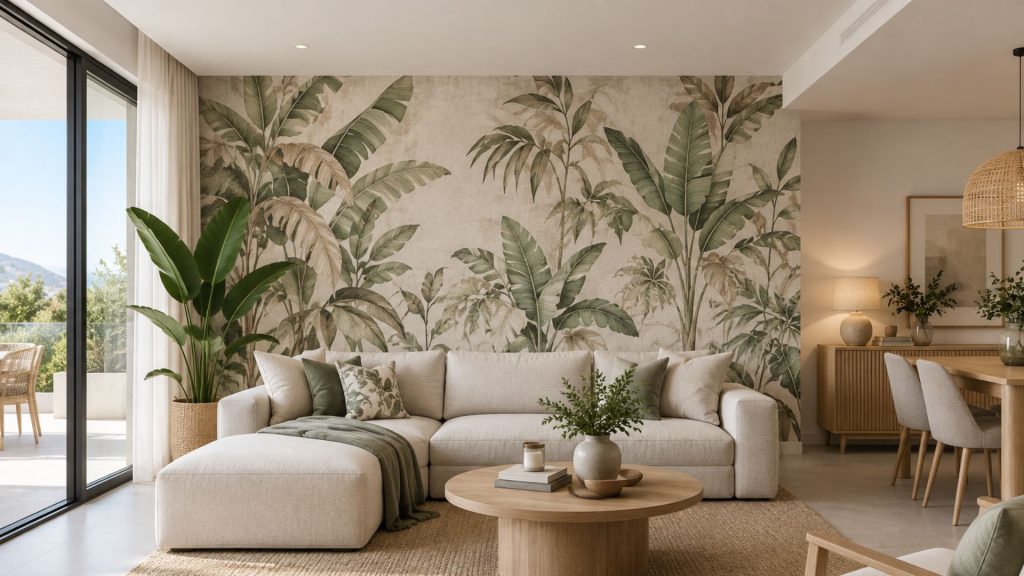
- Verde oliva o salvia: crea una combinación natural, muy ligada a los ambientes mediterráneos.
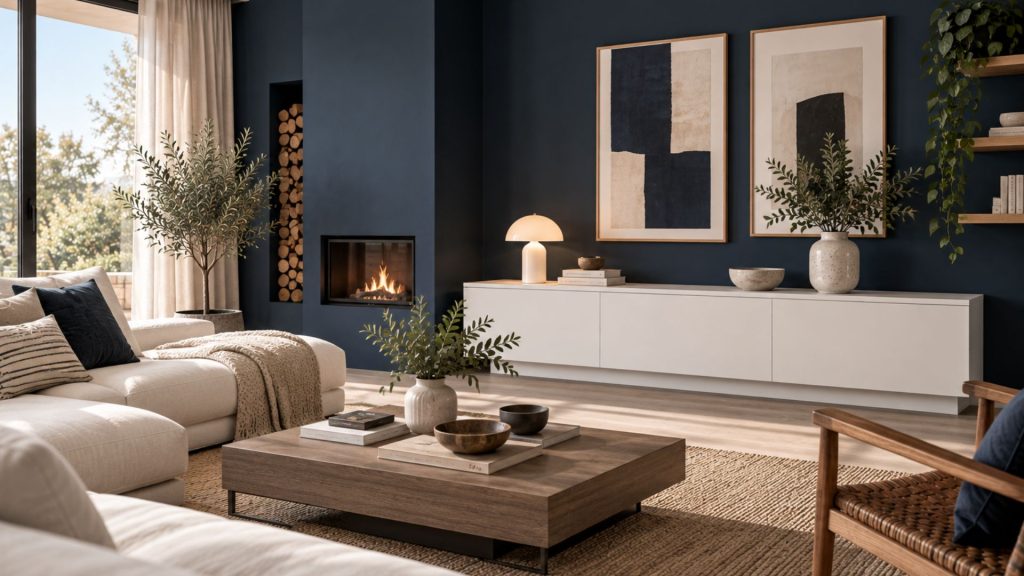
- Azul petróleo o profundo: el contraste complementario, para espacios con personalidad.
- Madera natural: refuerza la calidez y aporta textura.
Consejo del estudio
Limita la paleta a tres colores: el naranja, un neutro de base y un tono de apoyo. Así el espacio respira y el naranja se convierte en protagonista.
Paredes naranjas: cómo usarlas sin saturar
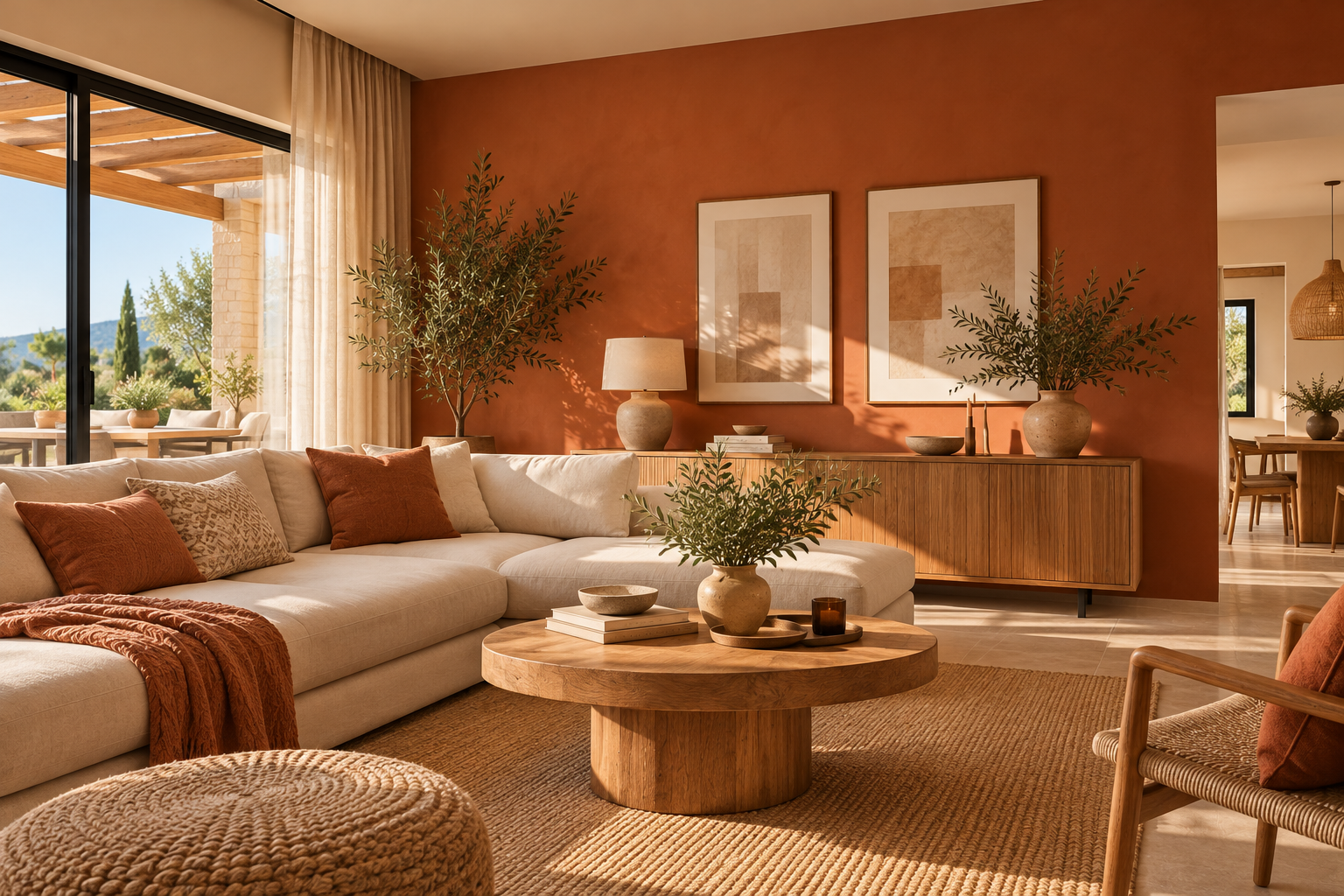
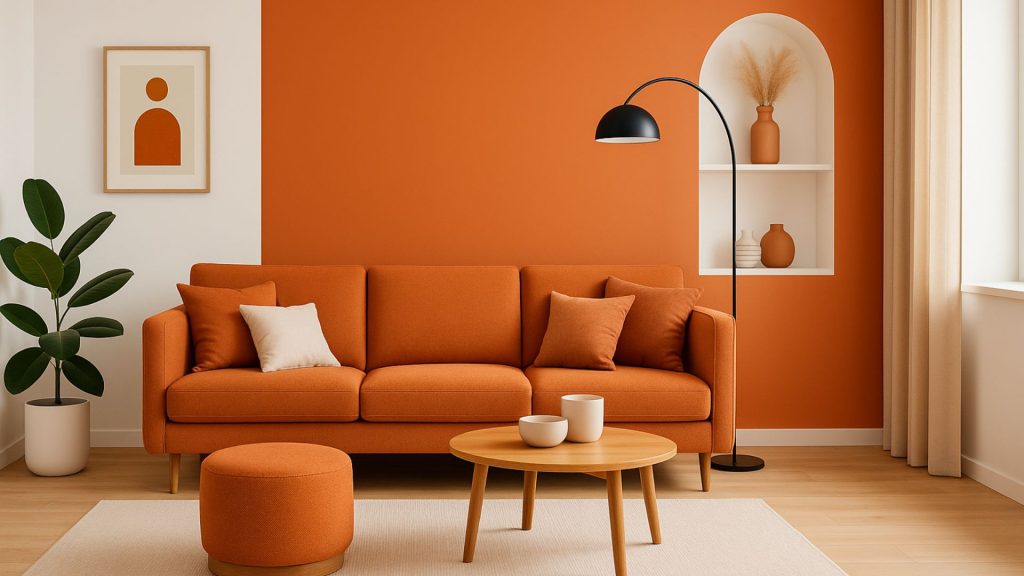
Pintar toda una estancia de naranja puede resultar excesivo. Una sola pared naranja funciona mucho mejor como punto focal: detrás del sofá, en el cabecero del dormitorio o en la pared del comedor. Así el color aporta calidez sin cargar el ambiente.
- Pared de acento: elige la pared que quieras destacar y deja el resto en neutros.
- Naranja pastel: si buscas un efecto más suave, los tonos melocotón o naranja claro iluminan sin saturar.
- Acabado mate: resta brillo y da un aspecto más elegante y matérico.
¿Quieres dar color a tu casa con criterio?
Te ayudamos a elegir la paleta y los materiales que mejor encajan con tu espacio.
Color terracota en paredes
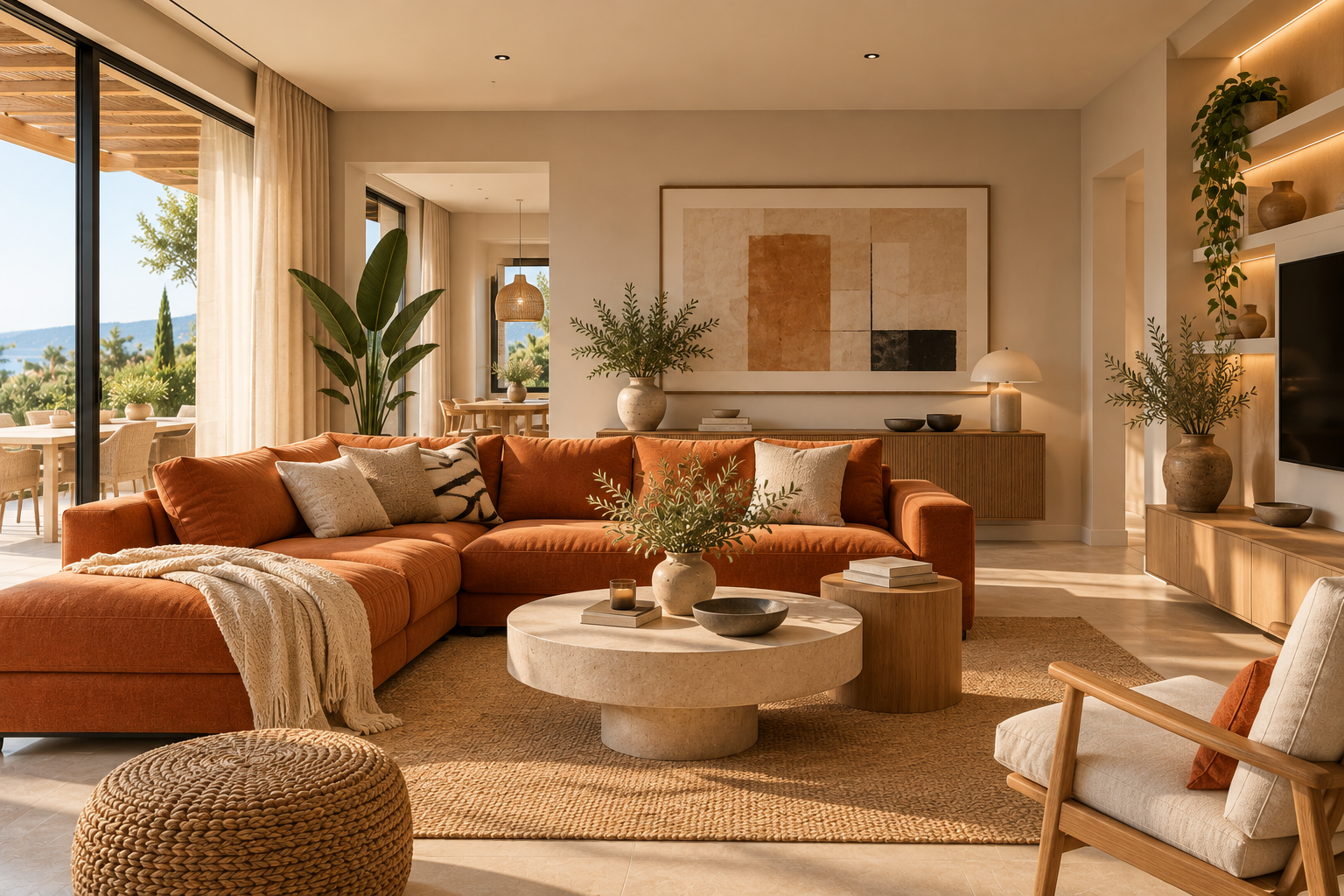
The color terracota en paredes es una de las formas más naturales de introducir el naranja en casa. Su tono terroso evoca la arcilla y la cerámica, y encaja de forma especial en las viviendas mediterráneas.
- Con blanco y madera: la combinación clásica, cálida y luminosa.
- Con fibras naturales: yute, mimbre o lino refuerzan su carácter artesanal.
- Con verde: las plantas y los tonos oliva crean un contraste fresco y natural.
- Con acabados texturizados: estucos o pinturas de cal realzan su aspecto matérico.
Sofá naranja y textiles para introducir el color
Si no quieres pintar, un sofá naranja puede convertirse en el protagonista del salón. Combinado con paredes claras y una alfombra neutra, aporta personalidad sin saturar. Otras formas de incorporar el naranja sin obras:
- Cojines y mantas en tonos terracota o mostaza.
- Cortinas o alfombras que aporten calidez al conjunto.
- Cuadros y láminas con detalles anaranjados.
- Cerámica decorativa o macetas de barro.
El naranja según el estilo decorativo
Estilo mediterráneo
Terracota combinado con blanco, madera y cerámica para espacios acogedores y luminosos.
Estilo vintage
Butacas en mostaza o naranja quemado, lámparas retro y papel pintado geométrico inspirado en los años 60 y 70.
Estilo moderno o nórdico
Melocotón o coral junto a grises y blancos, con un uso sobrio y en pequeños acentos.
Industrial style
Naranja quemado u oxidado combinado con cemento, hierro y cuero envejecido.
07 · EstanciasEl naranja por estancias
- Salón: un sofá, una alfombra o lámparas en tonos naranjas como punto focal.
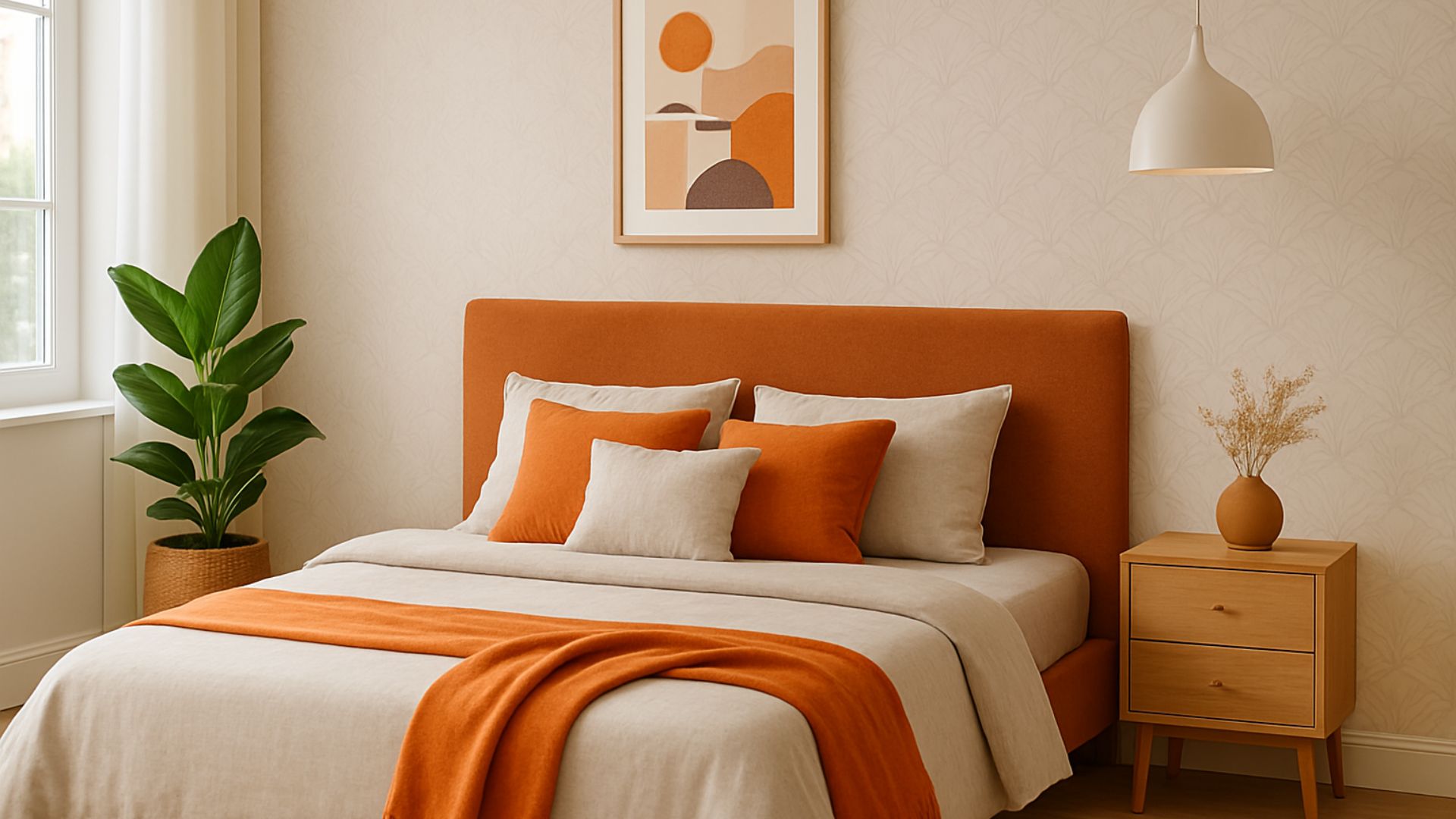
- Dormitorio: ropa de cama, cabecero o cortinas en terracota o melocotón para un ambiente cálido.
- Comedor: sillas, vajilla o una pared de acento que inviten a la sobremesa.
- Cocina: accesorios, azulejos o macetas de barro que aporten un aire mediterráneo.
Errores al decorar con tonos naranjas
Abusar de la intensidad
El naranja puro, en dosis moderadas. Mejor como acento que en toda la estancia.
Neglecting lighting
El naranja necesita buena luz, preferiblemente natural, para lucir bien.
Mezclar demasiados colores llamativos
Evita combinarlo con rojos, amarillos brillantes o fucsias intensos.
Elegir materiales incoherentes
Mejor textiles naturales, cerámica, paredes mate o madera que brillos o plásticos.
Si quieres más inspiración, en Westwing encontrarás ideas para decorar con naranja.
09 · DudasPreguntas frecuentes sobre decoración con tonos naranjas
¿Qué colores combinan mejor con el naranja en una casa?
El blanco roto, el gris claro, el verde oliva o salvia, el azul petróleo y la madera natural son las combinaciones que mejor funcionan, tanto en paredes como en muebles y textiles.
¿Es buena idea pintar una pared naranja?
Sí, sobre todo como pared de acento. Una sola pared naranja aporta calidez y crea un punto focal sin saturar la estancia.
¿Qué tono de naranja es más fácil de integrar en casa?
Los tonos suaves como el melocotón o el coral, y los terrosos como el terracota, son los más fáciles de integrar porque combinan bien con neutros y materiales naturales.
¿Cómo introducir el naranja sin pintar paredes?
Con un sofá o una butaca naranja, cojines, cortinas, alfombras, cuadros o piezas de cerámica en tonos naranjas.
¿El color naranja cansa en la decoración?
Solo si se abusa de su intensidad. Usado en dosis moderadas y combinado con neutros, el naranja aporta energía y calidez sin resultar cansado.
¿Empezamos a dar color a tu casa?
Cuéntanos tu idea y te asesoramos en cada paso. Para nosotros no existen proyectos pequeños.